


 Download area


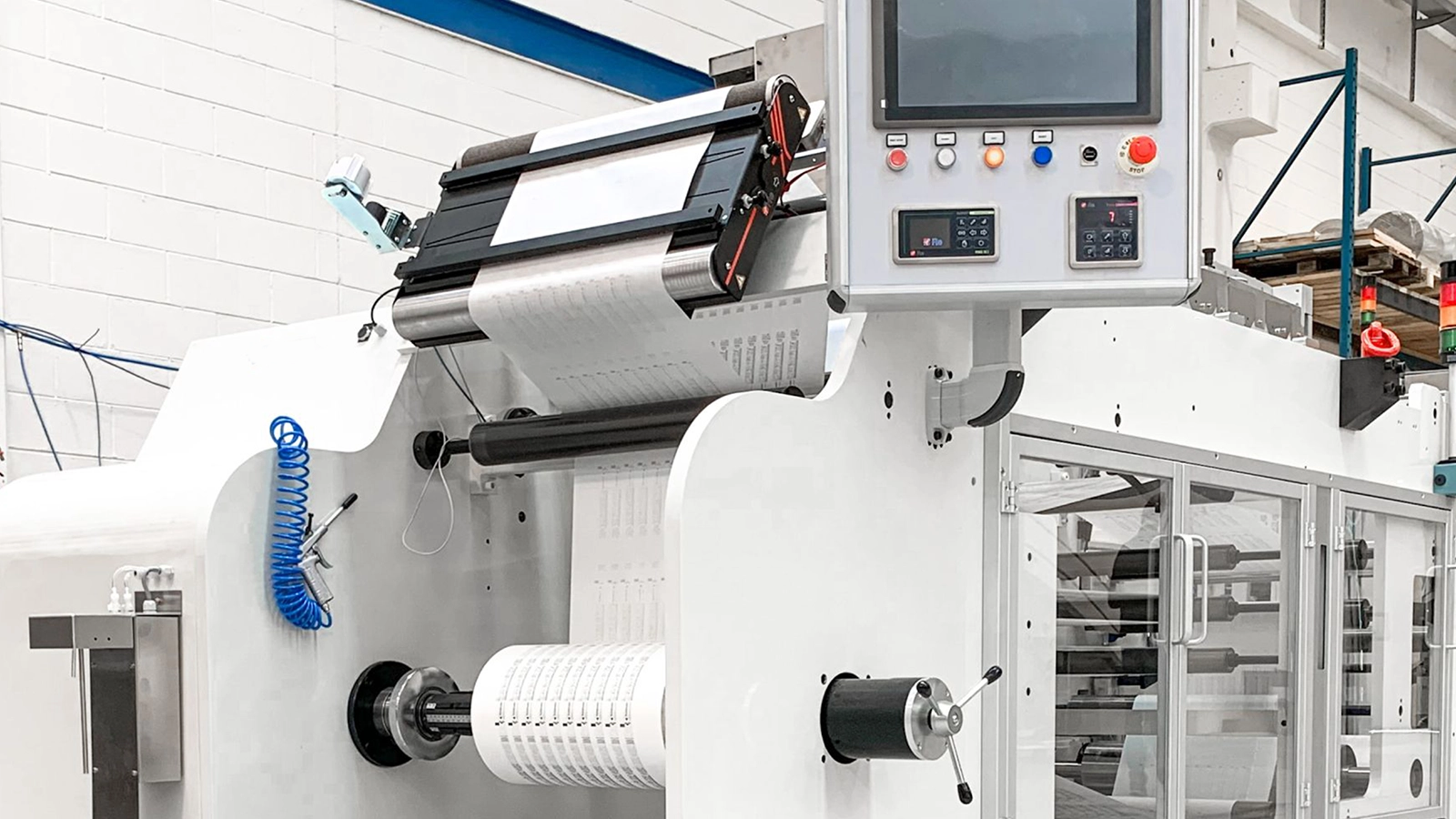
Retrofitting a converting line is about improving the machine you already trust.
When properly designed, integrating a web guiding system can significantly increase productivity, reduce waste and extend the competitive life of an existing production line.
What you’ll find in this article:
Why companies modernize existing machines
Many converting machines remain in production for decades.
In most cases, the mechanical structure is not the limiting factor.
What changes over time is not necessarily the machine itself, but the market around it.
Materials evolve. Production speeds increase. Customers demand higher quality standards, shorter lead times and lower production costs.
At the same time, operators expect machines to be easier to use and less dependent on continuous manual adjustments.
For this reason, companies rarely modernize a machine simply because it is old.
They modernize it because production requirements have evolved.
Typical objectives include:
- Increasing productivity
- Reducing material waste
- Improving product quality
- Automating manual operations
- Processing new materials
- Supporting new production strategies
In many situations, upgrading selected process control technologies offers a faster, more sustainable and more cost-effective way to improve performance than redesigning the entire production process.
Why integrating a web guiding system makes such a difference
Among the different technologies that can be introduced during a retrofit project, web guiding systems are often one of the investments with the fastest and most measurable impact.
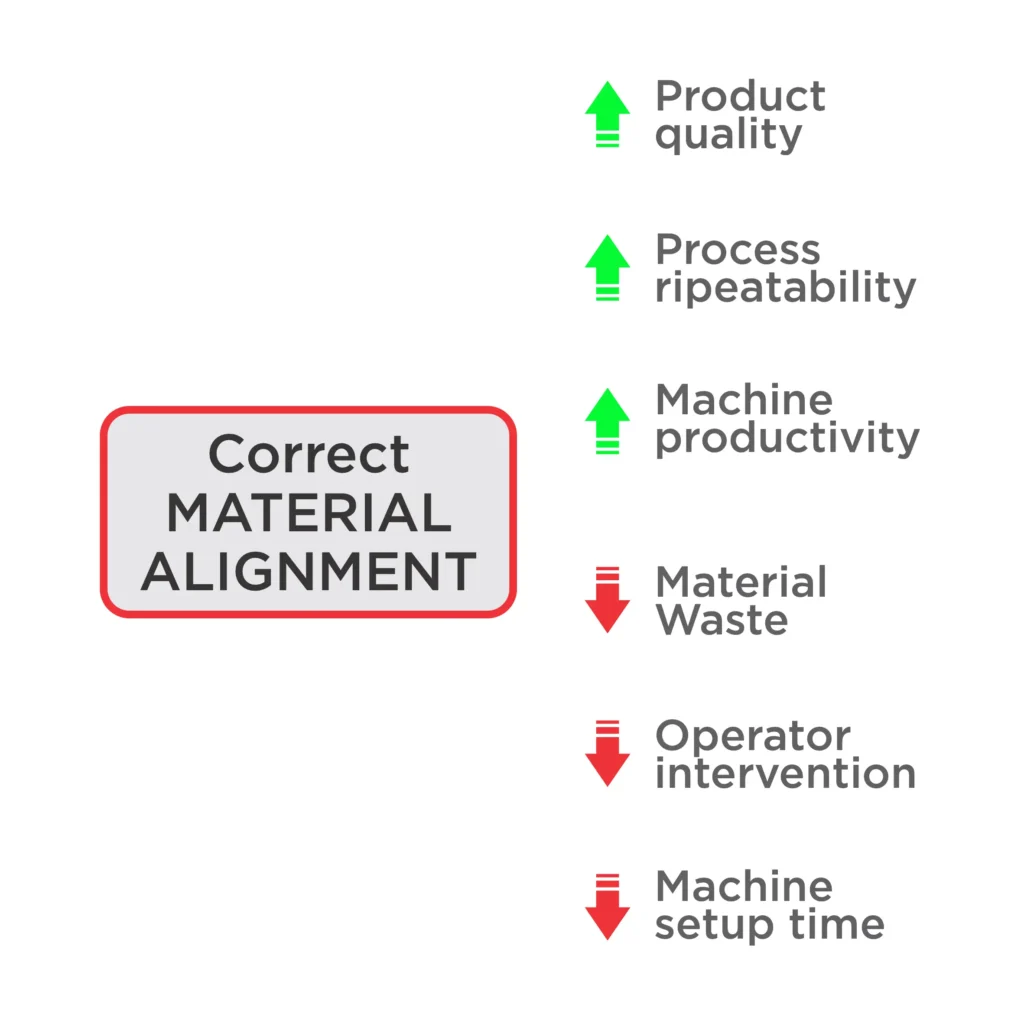
At first glance, a web guiding system simply keeps the material aligned. In reality, its contribution extends far beyond web positioning.
A correctly integrated web guiding system helps stabilize the entire converting process by preventing small web deviations from affecting downstream operations.
This results in:
- Lower material waste
- Better product quality
- Reduced operator intervention
- Faster setup
- Greater process repeatability
When talking about printing, laminating, slitting-rewinding or other processes, maintaining accurate web alignment does not simply improve one operation.
The main challenges of retrofit projects
Installing a web guiding system on an existing machine is very different from integrating it into a new design.
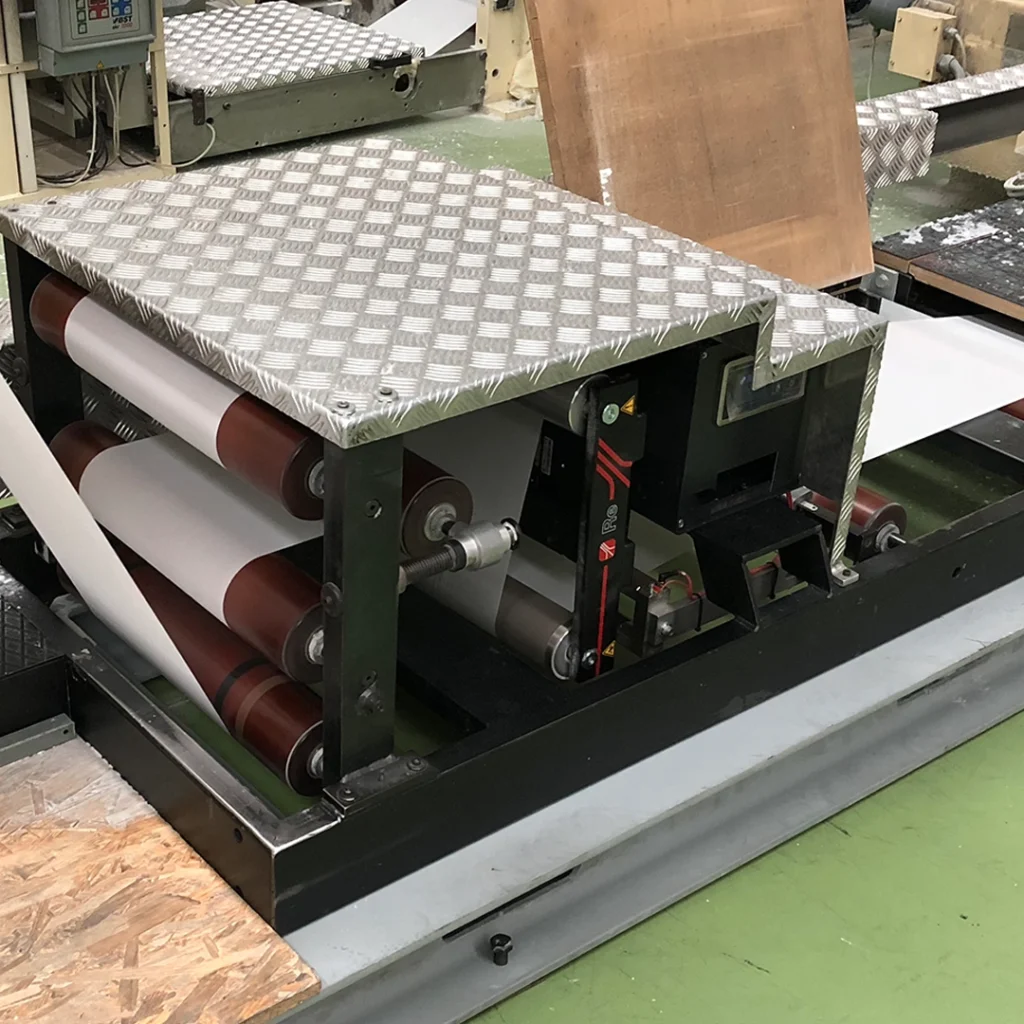
In a machine upgrading project the web guiding system must adapt to a machine that already exists, often after years of production and, in many cases, after several modifications that are no longer documented.
Every existing machine tells its own story. Understanding that story is often the first step towards a successful retrofit. Each project presents different constraints, including:
- Available installation space
- Roller positions
- Existing web path
- Electrical architecture
- PLC and control system
- Required production performance
These factors determine not only which solution can be installed, but also how effectively it will perform once production resumes.
For this reason, retrofit projects should never begin by selecting a product. They should begin by understanding the application.
Designing the right retrofit solution
Every successful project starts by understanding the production process before selecting the technology.
One of the most common mistakes in retrofit projects is starting from the product instead of the production problem.
Before selecting a web guiding system, engineers should ask a few fundamental questions:
- Where is waste actually generated?
- Is manual correction still required during production?
- Which materials are currently being processed?
- Have production speeds increased over the years?
- Are there mechanical or electrical constraints?
Answering these questions allows engineers to define the most appropriate retrofit strategy.
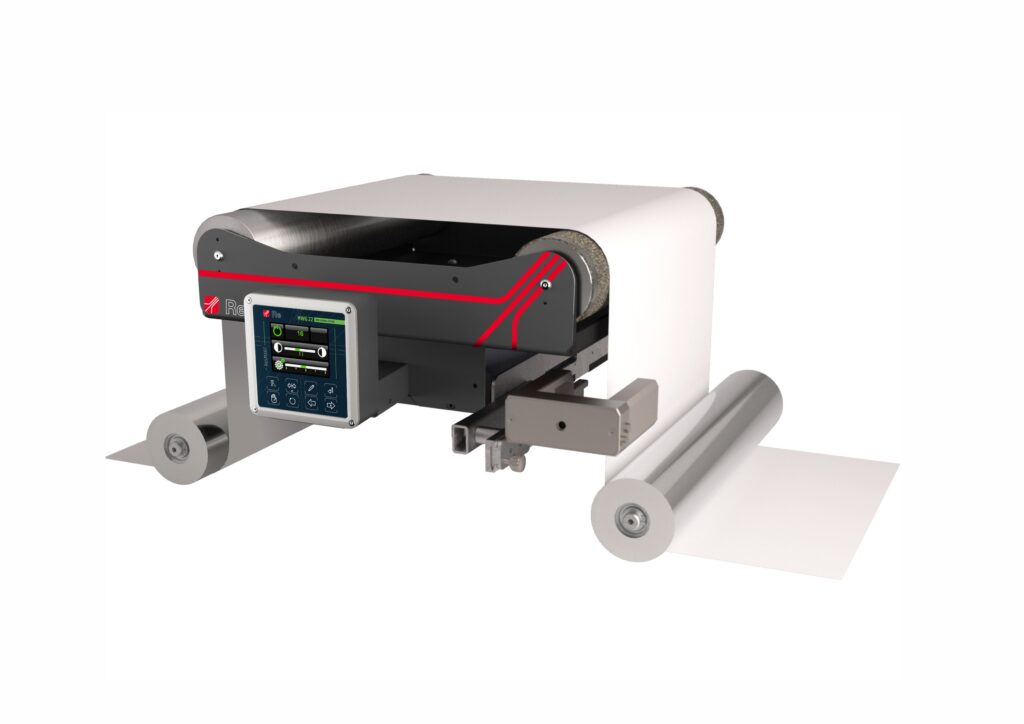
The answers determine not only the type of web guiding system, but also the sensor technology, the guide frame architecture and the overall integration approach.
The best web guiding system is never the one with the highest specifications.
It is the one that best fits the application, the machine and the production objectives.
The importance of choosing the right technical partner
Technology alone does not determine the success of a retrofit project. The experience behind its integration is often just as important.
A web guiding retrofit requires much more than supplying a guide frame and a sensor. It requires understanding the production process, the machine architecture and the customer’s operational objectives.
When evaluating a technical partner, OEMs and converters should consider several aspects.
Application Expertise: The partner should understand converting processes, material behaviour and how web guiding influences the stability of the entire production line.
Integration Capability: Every retrofit project presents different mechanical, electrical and operational constraints. The ability to adapt the solution to the machine is often more valuable than simply offering a wide product portfolio.
Flexibility: While many retrofit projects can be solved using standard solutions, others require mechanical adaptations or customized configurations to achieve the desired performance.
Long-Term Support: Production requirements continue to evolve. Choosing a partner capable of supporting future upgrades, maintenance and technical assistance helps protect the investment throughout the machine lifecycle.
Ultimately, the success of a retrofit depends not only on the web guiding system itself, but on how effectively that system is integrated into the existing machine.
How Re approaches web guiding retrofit projects
Every retrofit project starts with understanding the application.
At Re, we believe that no two converting lines are exactly the same. This is why every retrofit begins with a technical analysis of the machine, the production process and the customer’s objectives.
Our engineering team supports OEMs and converters in selecting the most suitable web guiding architecture, sensor technology and integration strategy, always taking into account the existing mechanical constraints and the expected production performance.
Whenever standard solutions fully satisfy the application requirements, they represent the fastest and most efficient approach. When the application demands something different, our engineering team can adapt the system to achieve the best possible integration without compromising reliability, maintainability or future serviceability.
With decades of experience in converting applications, Re supports customers from the initial feasibility study through commissioning and long-term technical assistance, helping them modernize existing production lines while maximizing process performance and minimizing implementation risks.
F.A.Q.
Whenever an existing converting line still has a solid mechanical structure but requires better productivity, lower waste, improved quality or higher levels of automation.
In most cases, yes. However, the solution must be selected according to the available space, machine geometry, production requirements and existing control architecture.
Not necessarily. A properly engineered retrofit aims to maximize performance while minimizing mechanical modifications and installation time.
Machine layout, material characteristics, production speed, available space, required accuracy and production objectives are the key factors that should be evaluated.
Because the success of a retrofit depends not only on the web guiding technology itself, but also on the partner’s ability to integrate that technology into the existing machine while achieving the desired production performance.