


 Download area


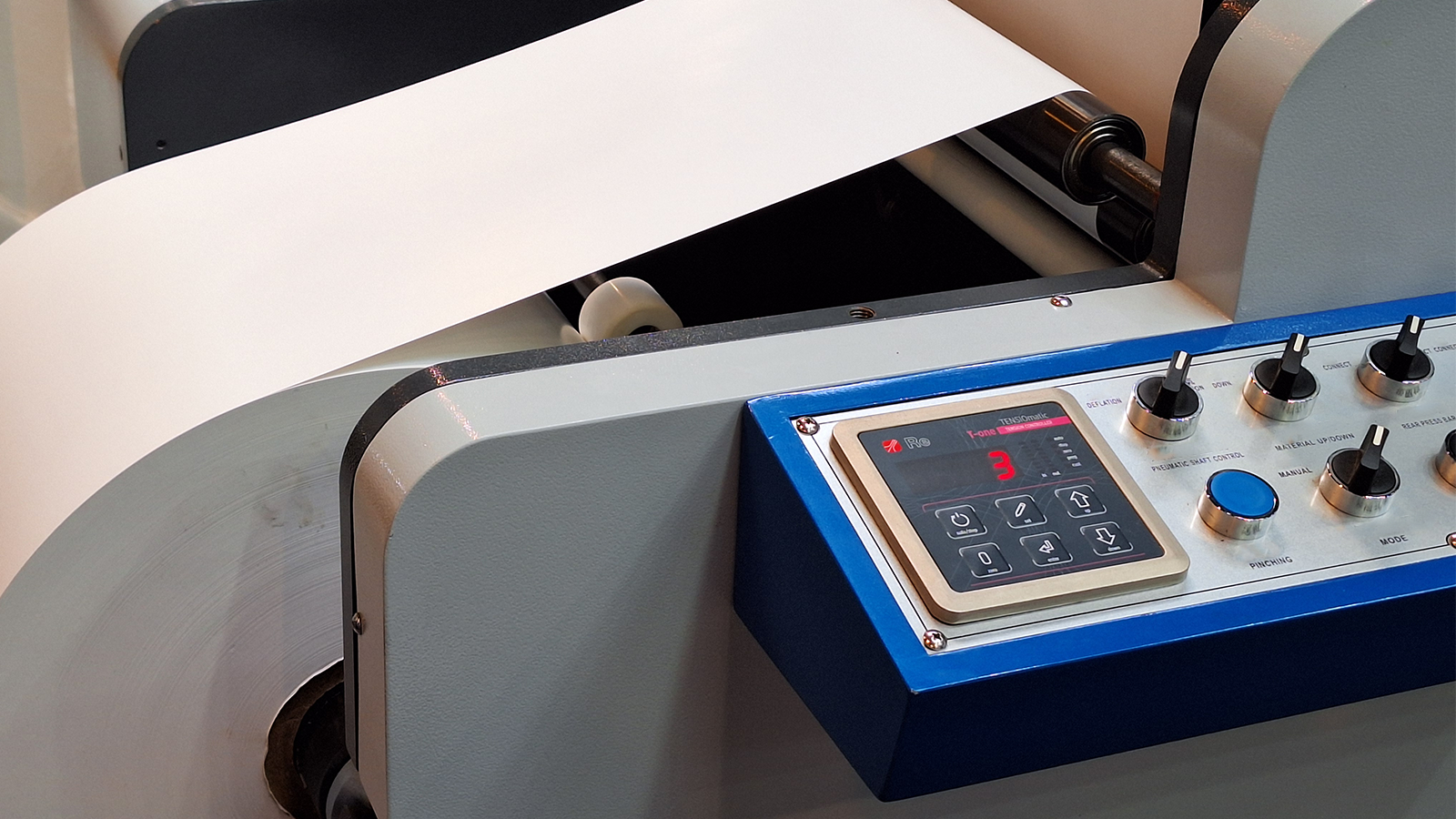
During a reel-to-reel process, the tension of materials such as paper, plastic film, textiles, nonwovens and other webs tends to change continuously. Variations in roll diameter, acceleration and deceleration, line speed, material characteristics and the different sections of the machine can all affect web behaviour during production.
A tension controller is designed to compensate for these variations and keep web tension as stable and consistent as possible throughout unwinding, processing and rewinding. Effective tension control helps prevent web breaks, stretching, wrinkles, slack web conditions and defects in the final wound roll, improving both process quality and repeatability.
Cosa troverai nell’articolo:
> What is a tension controller?
A tension controller is the brain of an automatic web tension control system. It is an electronic device that receives information from the machine and the moving web, compares it with the desired tension value and sends a corrective command to the component that physically acts on the process: the actuator.
Input signals may come, for example, from load cells, a dancer roller, roll diameter sensors, encoders or machine speed signals.
The operator sets a reference value in the controller, called the setpoint, which represents the desired web tension for a specific process. The tension controller continuously compares this value with the actual process conditions and, whenever it detects a difference, adjusts the command sent to a brake, clutch or motor.
It is therefore important to distinguish between these two functions: the tension controller does not physically generate web tension. It determines how much and how the system must react, while the actuator performs the actual correction.
In simple terms, the controller is the brain of the system, while the actuator provides the force required to apply the correction.
> How does a tension controller work?
The operation of an automatic tension controller can be summarized in four basic actions:
measure → compare → calculate → correct
- The system measures or determines web tension using load cells, dancer roller or other process signals.
- The tension controller receives the measured value and compares it with the setpoint defined by the operator.
- It calculates the difference, or error, between the actual web tension and the desired tension.
- It sends a corrective signal to the actuator, changing braking torque, motor torque or speed.
In more advanced systems, the tension controller uses a PID algorithm (Proportional, Integral and Derivative) to compensate for tension variations quickly and consistently.
The Proportional component (P) reacts according to the current error: the greater the difference from the setpoint, the greater the corrective action.
The Integral component (I) eliminates accumulated error over time and helps remove any remaining offset, allowing web tension to reach the required value accurately.
The Derivative component (D) evaluates how quickly the error is changing, helping to reduce oscillations and sudden tension variations.
> How is tension controlled on an unwinder?
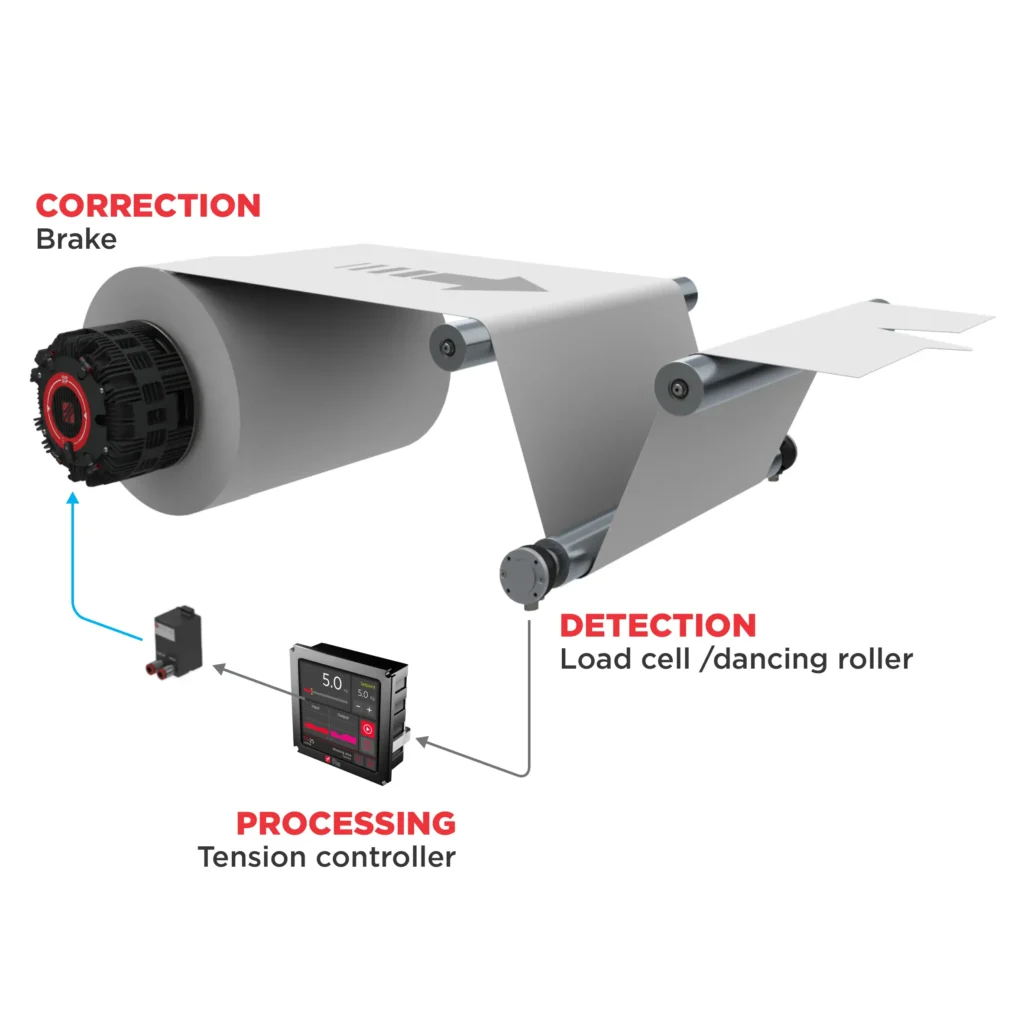
In the unwind section, the roll diameter progressively decreases during production. To maintain the same web tension, the torque applied to the roll must therefore change continuously.
If the same braking torque were maintained while the roll diameter decreased, web tension would increase. The material could become excessively tensioned, causing stretching, wrinkles, web breaks or instability in the next machine section.
The basic relationship is:
Braking torque = Web tension × Roll radius (C = F × r)
This relationship explains why the torque required to maintain constant web tension must decrease as the unwind roll diameter becomes smaller. For this reason, the tension controller dynamically adjusts the command sent to the actuator as the roll diameter changes.
A typical configuration may be:
load cells / dancer roller → tension controller → brake or motor
The main advantage of an automatic tension control system is its ability to continuously adapt to changing roll conditions without requiring manual corrections from the operator.
> How is tension controlled inside a converting line?
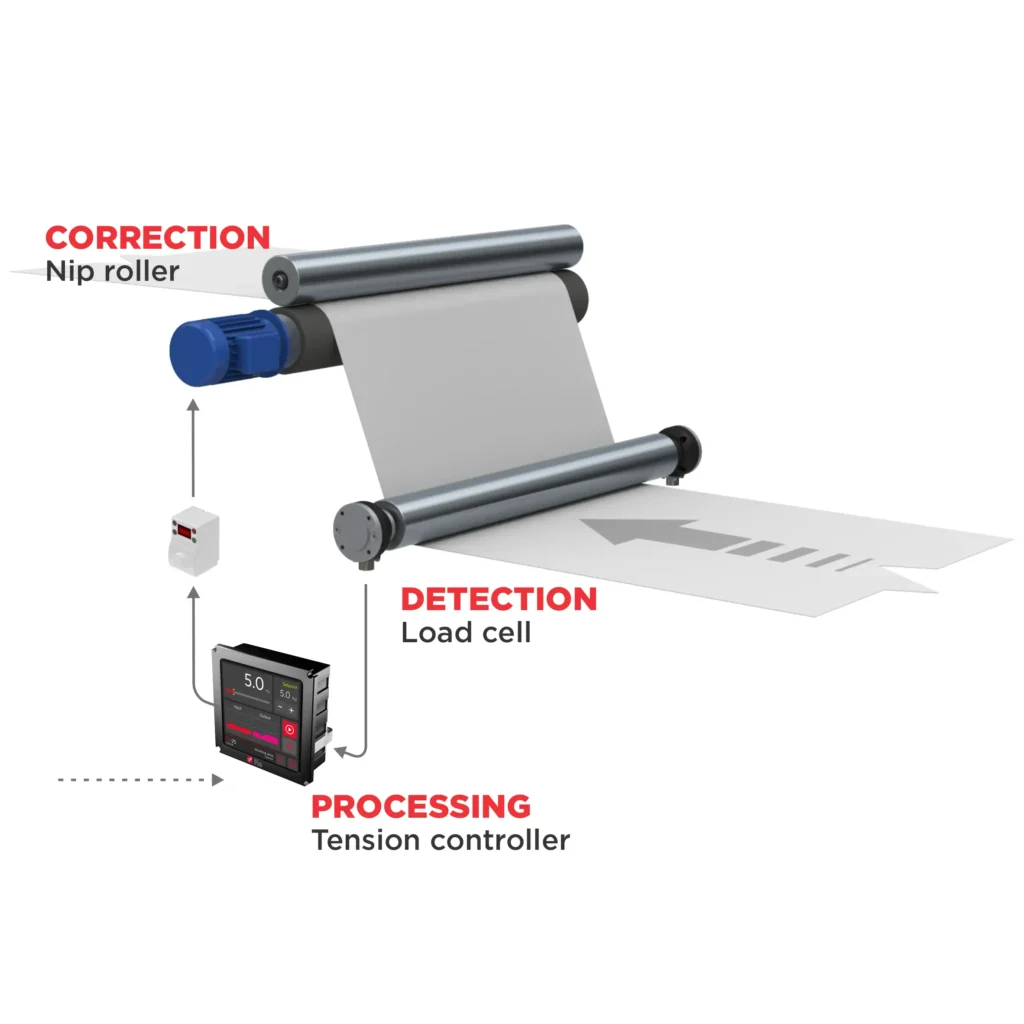
Between the unwinder and the rewinder, a machine may include several independent tension zones.
Driven rollers, nip rollers, motors and dancer systems can divide the converting line into different sections, each with its own tension requirements.
In these areas, web tension directly affects material stability during processes such as: printing; laminating; slitting; coating; or other processes.
Excessive tension can cause stretching, deformation or wrinkles. Conversely, insufficient tension may cause the web unstable, causing flutter, lateral movement or difficulty in maintaining the correct web path.
The tension control system must therefore coordinate the different machine sections and maintain the required tension between one driven point and the next.
> How is tension controlled on a rewinder?
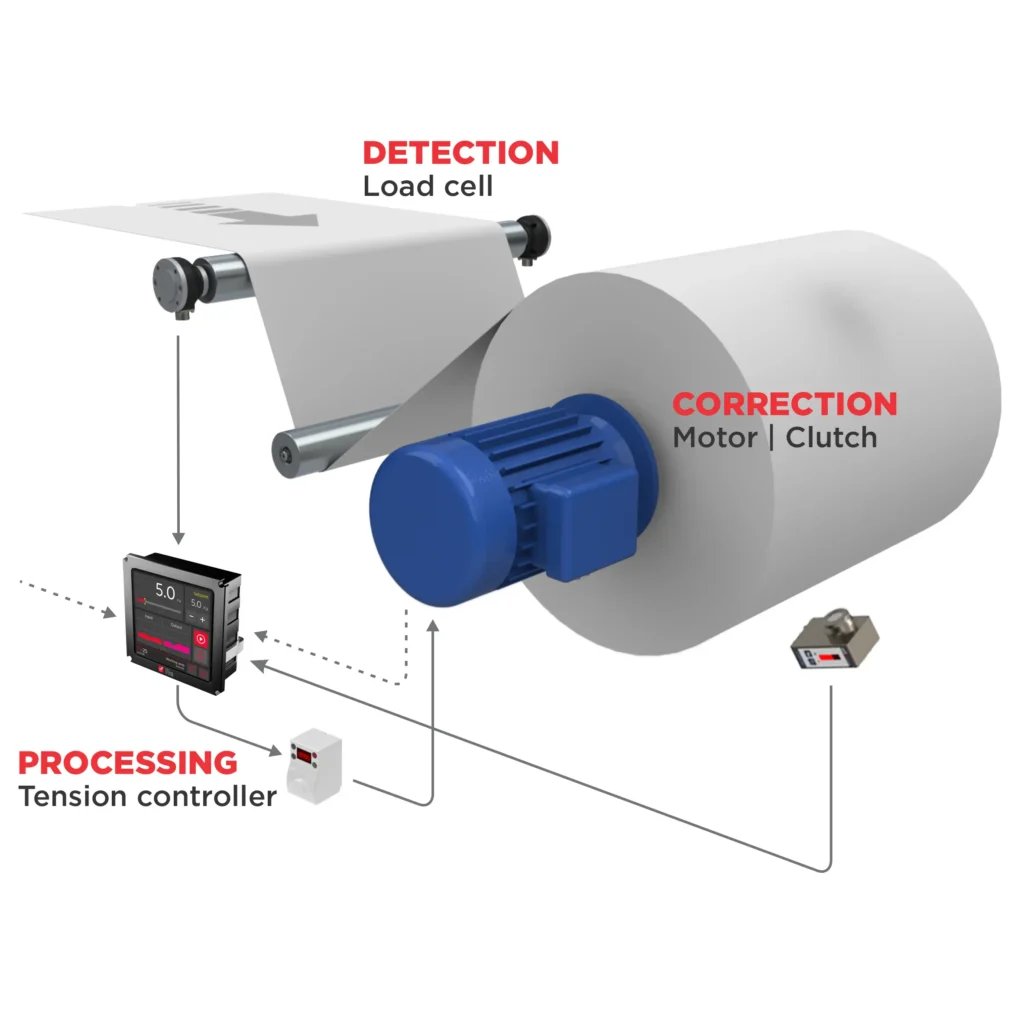
During rewinding, the opposite happens compared with unwinding: the roll diameter progressively increases. The required torque must therefore be continuously adjusted.
The tension controller receives feedback signals from the process and typically regulates a clutch or motor to maintain the desired tension while the final roll is being built.
The goal is not only to keep the moving web stable, but also to produce a roll with the correct mechanical characteristics.
Excessive tension can compress the already wound layers too much, causing deformation, core crushing or an excessively hard roll. On the other hand, insufficient tension can produce a loose roll and contribute to defects such as telescoping, where the wound layers shift laterally.
In some applications, taper tension control is therefore used. This strategy progressively reduces the tension setpoint as roll diameter increases, limiting the internal pressure on the already wound layers while maintaining a stable finished roll.
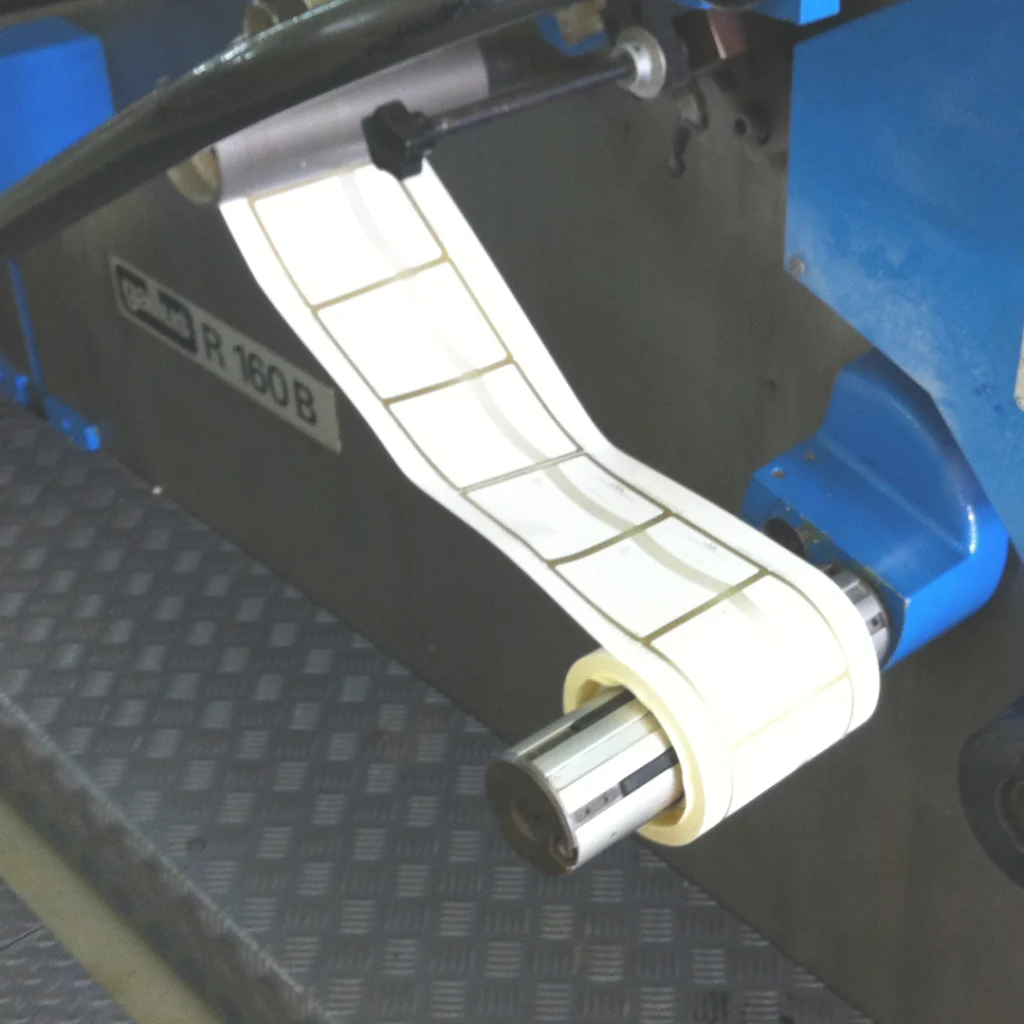
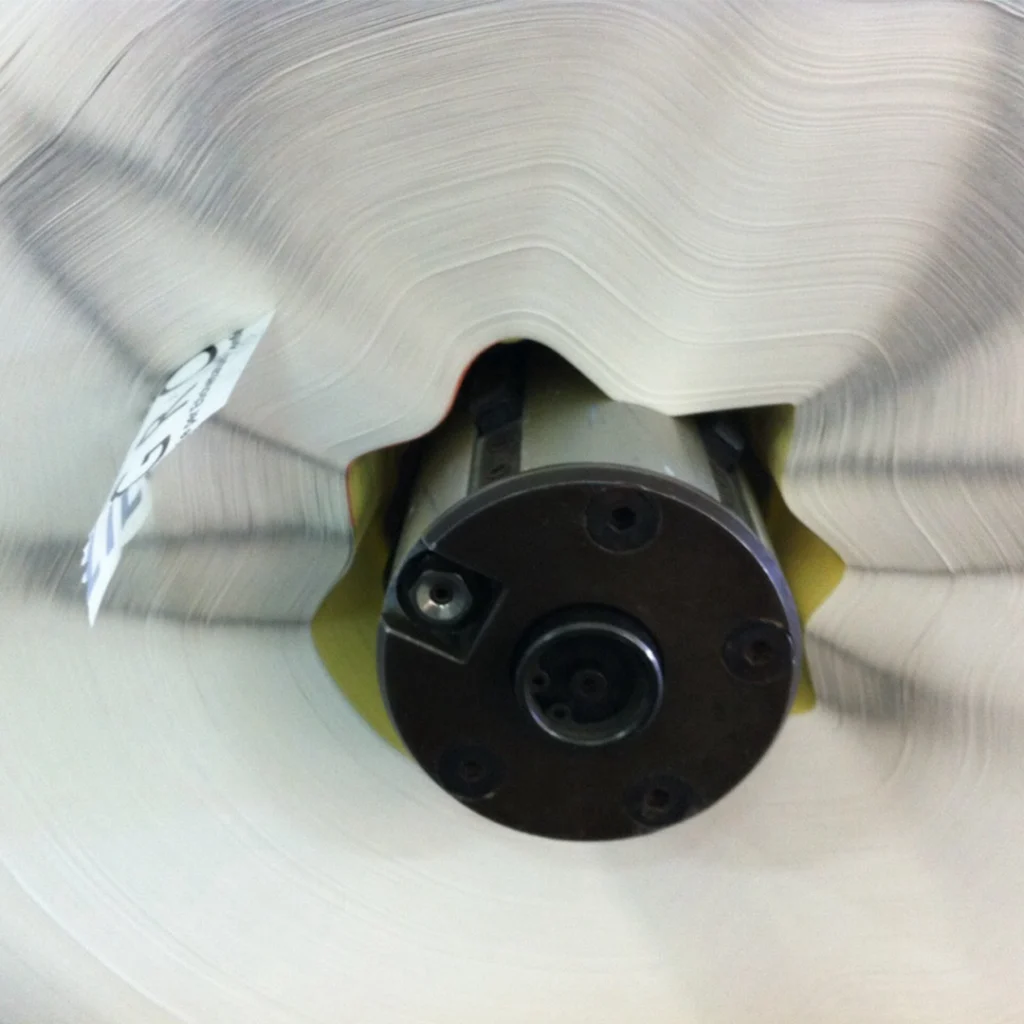
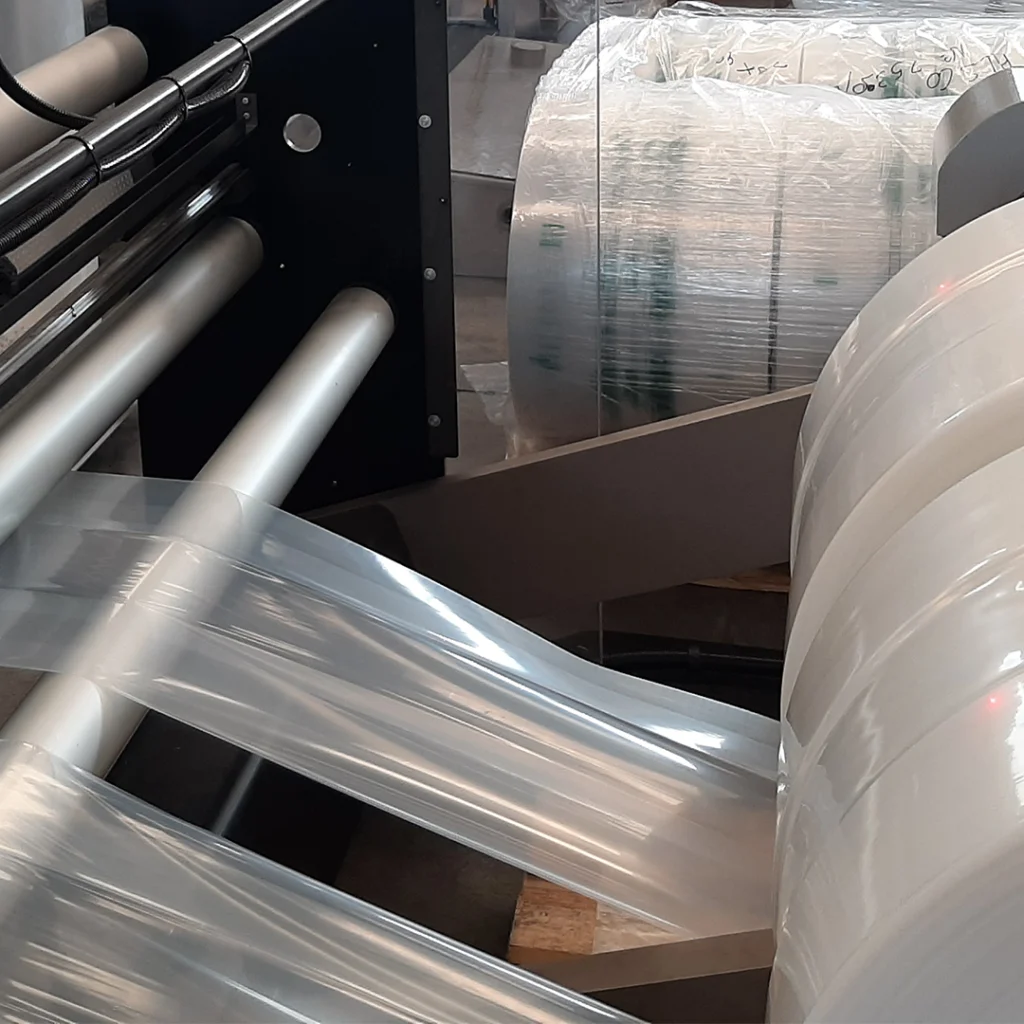
> The main components of an automatic tension control system
Before looking at the main components, it is useful to distinguish between two basic control strategies.
Closed-loop tension control: the system uses continuous feedback, for example from load cells or the position of a dancer roller, to correct the process in real time.
Open-loop tension control: regulation is calculated using indirect process parameters, such as roll diameter, without directly measuring web tension.
In both cases, an automatic tension control system can be divided into three main functions.
Measurement and feedback
The system must acquire information about actual process conditions through components and signals such as:
- load cells
- dancer rollers
- roll diameter sensors
- encoders and machine speed
Control
The tension controller receives these signals, compares them with the setpoint and calculates the required correction.
Actuation
The corrective action is applied through:
The accuracy of web tension control therefore depends on the ability of all these components to work together quickly and consistently.
> Why use an automatic tension controller?
Turning web tension from an operator-dependent variable into an automatically controlled process parameter provides several important advantages. An automatic tension controller can provide:
- more stable and linear web tension;
- fewer sudden tension peaks and drops;
- improved process repeatability;
- less operator intervention;
- reduced material waste;
- higher final product quality;
- the ability to operate at higher line speeds.
The role of a tension controller is therefore to transform web tension from an operator-dependent variable into a controlled and repeatable process parameter.
The principle is simple: the more predictable and repeatable the behaviour of the material becomes, the closer the entire converting line can operate to its optimum performance.
> Re tension control solutions
Re develops complete solutions for automatic web tension control in converting lines, combining tension controllers, load cells, pneumatic and electromagnetic brakes and the other components required to manage unwinding, processing and rewinding.
The Re range includes:
- load cells for different machine configurations and force ranges;
- tension controllers for torque control on unwinders and rewinders, as well as line speed control;
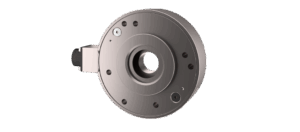
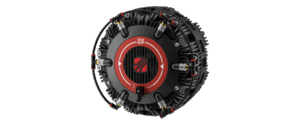
- pneumatic and electromagnetic brakes for different torque ranges and applications.
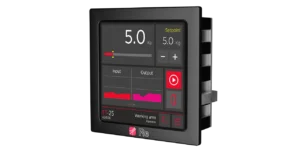
Re tension controllers can operate in closed-loop systems using load cells or dancer rollers, as well as in open-loop systems using roll diameter or position detection. Re also provides solutions for controlling web tension during unwinding, rewinding and intermediate processing sections.
The correct combination of measurement, control and actuation makes it possible to adapt the tension control system to the material characteristics, machine configuration and production requirements.
F.A.Q.
A tension controller continuously compares the actual web tension with the defined setpoint and sends a corrective signal to a brake, clutch or motor in order to maintain the required tension.
It uses continuous feedback from load cells, dancer rollers or other process signals. When a deviation from the setpoint is detected, the controller automatically adjusts the command sent to the actuator.
During unwinding, the roll diameter decreases, while during rewinding it increases. The required torque must therefore be continuously adjusted according to different control strategies to maintain the correct web tension.
Depending on the machine configuration, a tension controller can regulate pneumatic or electromagnetic brakes, clutches and motors.
In closed-loop systems, web tension can be measured directly through load cells or controlled indirectly through the position of a dancer roller. In open-loop systems, the control action can instead be calculated using parameters such as roll diameter. Load cells convert the mechanical force generated by web tension into an electrical signal that can be used by the control system.