


 Download area


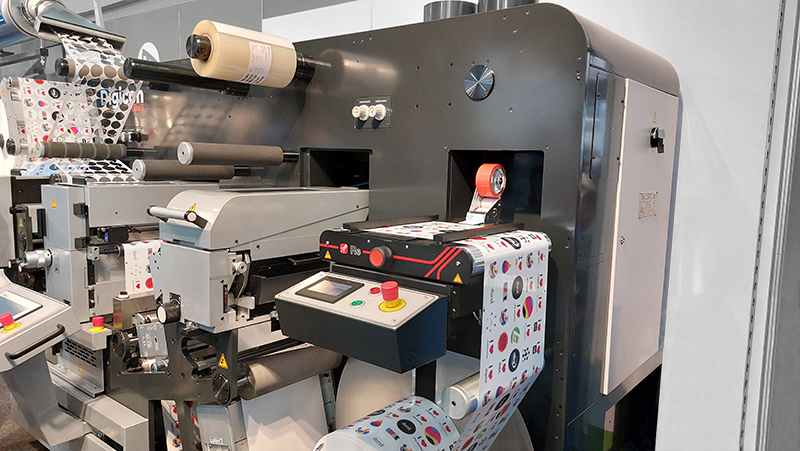
A web guiding system is an automatic system designed to keep a moving material in the correct position while it travels through a converting line. By detecting lateral deviations and correcting them in real time, it helps improve process stability, product quality and machine efficiency.
In production processes involving paper, plastic film, cardboard, nonwoven materials and many other substrates, the web is unwound, guided through a long path of rollers, processed and finally rewound. During this process, even small lateral movements can turn into major alignment problems. If the material does not remain in the correct position, the result can be machine stops, material waste, lower product quality or even web breaks.
This is why web guiding systems have become increasingly important in modern converting lines, especially as line speeds continue to increase and process tolerances become tighter.
> What is a web guiding system?
A web guiding system is used to monitor and correct the deviation of a moving material from its optimal path, so that it remains in the desired position throughout the process. Its purpose is simple: keep the material aligned while it moves through the machine.
Without a web guiding system, the web naturally tends to slide sideways. This is not an unusual phenomenon. Under real industrial conditions, there are many reasons why a material may deviate toward one side during processing.
The main causes are:
-
-
- Material imperfections. The substrates being processed are not always perfectly flat, uniform or evenly wound. Thickness variations, imperfect reels or material irregularities can all affect web behaviour.
- Machine imperfections. Rollers may not be perfectly concentric or perfectly aligned. Even very small defects can have a major impact on the lateral movement of the material. In some cases, even the installation conditions of the machine can influence web reactions.
- Operator errors.For example, the reel may be loaded slightly off-center on the unwinder. In addition, other process variables, such as web tension, can also contribute to alignment problems.
-
For all these reasons, a web guiding system is not a secondary accessory, but a practical and necessary solution for controlling a real production issue.
> Why is web alignment important in converting lines?
Proper web alignment is essential because many converting processes require the material to reach a precise position at a specific point in the machine. If the material shifts laterally, process accuracy is immediately compromised.
Having a web guiding system is important for several reasons:
Material stability. A stable web is easier to manage and more predictable during production. This helps the entire line operate in a more controlled way.
Process accuracy. In printing applications, poor alignment can cause uneven ink distribution or register issues. In slitting-rewinding, the blades may cut in the wrong position. In laminating or coating processes, two or more materials may fail to overlap correctly, causing misalignment and increasing trim or scrap. In any application where precision matters, web alignment directly affects the final result.
Waste reduction. High-speed lines process a large amount of material in a short time. Even a small alignment error, if not corrected immediately, can generate a significant amount of scrap. Damaged edges, rejected products and production interruptions can all result from improper guiding.
Production efficiency. Without an automatic web guiding system, the operator may be forced to slow down the line, stop the machine frequently or manually adjust the web path. If the web breaks, the line must be stopped and the material threaded again. All of this means lost time, wasted material and avoidable costs.
Ultimately, poor alignment does not only affect the process, but also the final product. A stable and accurate web path is one of the key conditions for achieving consistent quality.
> How does a web guiding system work?
A web guiding system monitors the position of the moving material and applies real-time corrections to keep it aligned within predefined tolerances. It does not simply correct misalignment after it occurs, but works as a continuous loop based on detection, processing and correction.
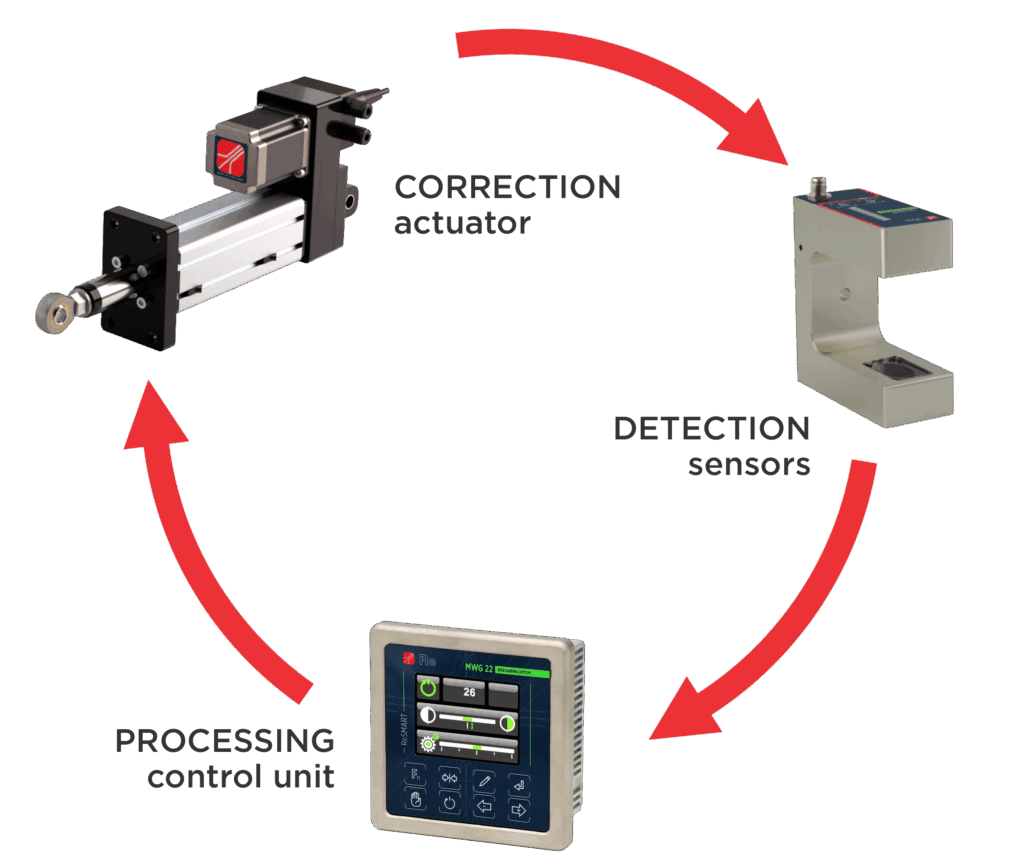
Its operation can be summarised in three steps:
-
- Detection. Sensors read the edge of the material or a color contrast on it and send real-time position data.
- Processing. A controller analyses the deviation, compares the actual web position with the reference position and calculates the required correction.
- Correction. An actuator moves the web or the guiding roller in order to bring the material back to the desired position.
This cycle repeats continuously while the line is running. Because the system reacts in real time, it is especially effective in high-speed or high-precision applications where manual adjustment would be too slow and inaccurate.
> Main components of a web guiding system
An effective web guiding system is based on three main elements that must work continuously and with high precision: sensors, controller and actuator.
In simple terms, the operating logic is this: Detect the deviation -> Calculate the correction -> Move the system -> restore alignment -> continuous cycle.
The sensor: the eye of the system
They detect the position of the material in real time and provide the feedback signal used for correction. Depending on the material and on the type of reference to be detected, sensors are generally divided into three main groups:
- ultrasonic sensors, suitable for opaque or reflective materials;
- infrared sensors, often used for sound-absorbing materials such as certain textiles or nonwovens;
- optical sensors, ideal for detecting colour contrasts, printed lines or patterns.
The control unit: the brain of the system
The control unit receives the signal from the sensor, compares it with the desired position and sends the command to the actuator.
The actuator: the system’s operator
It receives the instruction from the controller and changes the web position through the guiding mechanism.
> Main types of web guiding systems
Depending on the application, machine layout and the point where control is needed, there are three main types of web guiding systems.
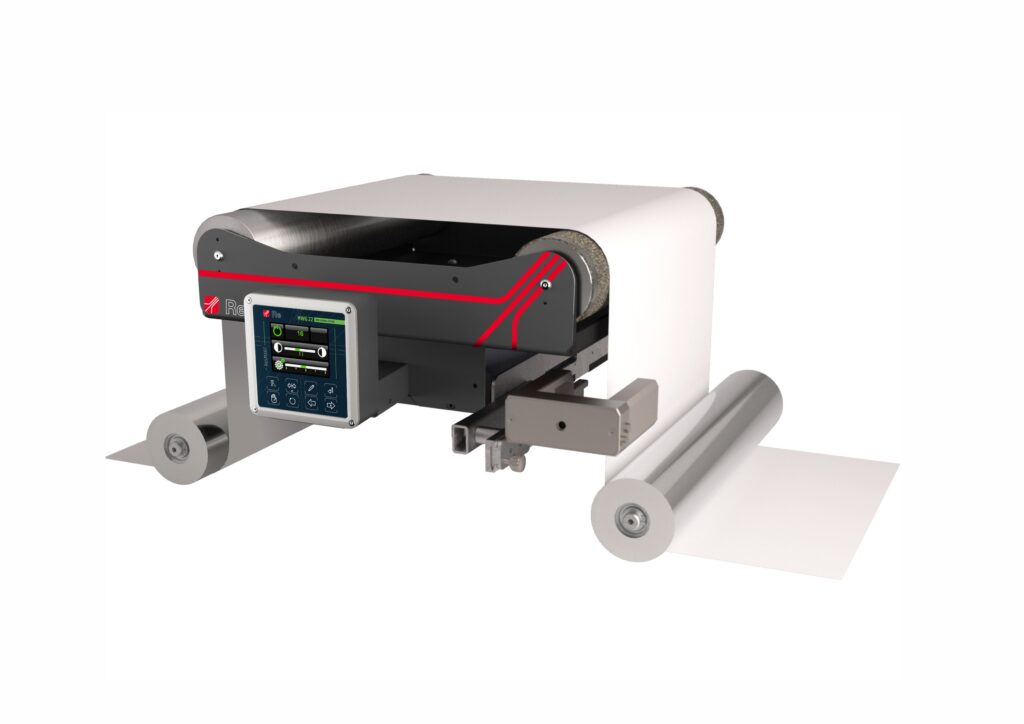
Pivoting frame webguide systems
Are the most common solution when the web needs to be corrected along its path. The pivoting frame is a mechanical structure with two rollers that rotates around an offset pivot point, either physical or virtual, as in Re systems. This movement changes the path of the material and corrects its lateral position. These systems are widely used because they are compact, effective and suitable for many converting applications.
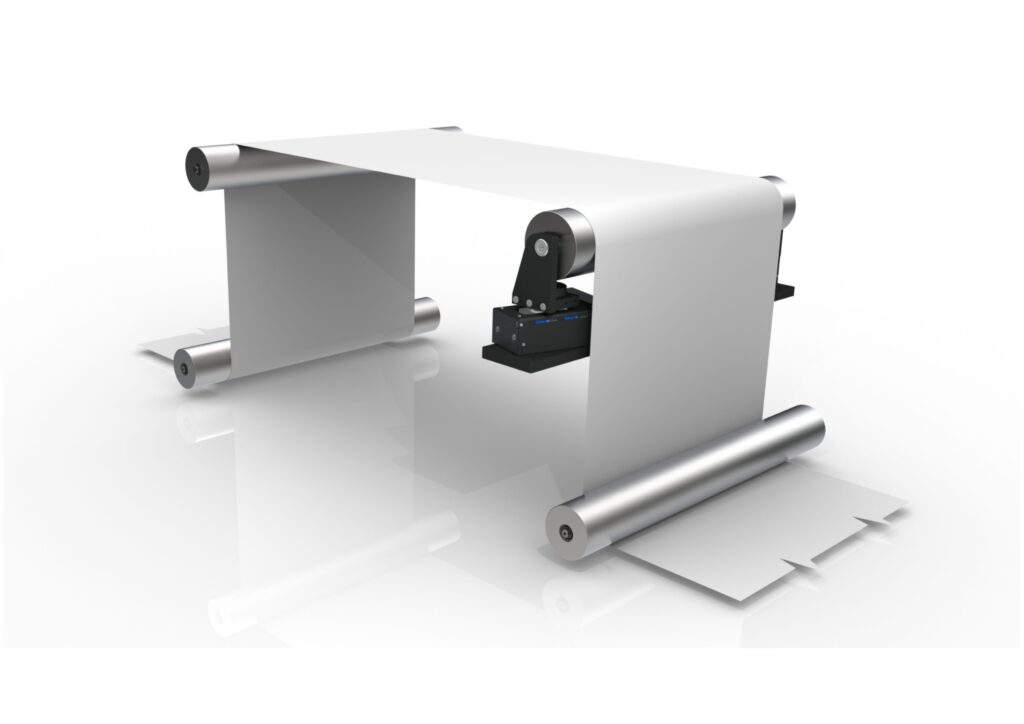
Steering roller webguide systems
Steering rollers are also used within the process, but they are generally preferred when the incoming web span is long, typically from two to five times the web width. In this case, the system corrects the material shifting it laterally while rotating it at the same time. Depending on the configuration, one or two rollers may be used.
Linear actuators
Linear actuators are often used on unwinders or rewinders, especially in compact machines. Instead of correcting the web path in an intermediate section of the line, they move the entire carriage so that the material starts from the correct position during unwinding or is accurately followed during rewinding. This helps produce reels with a flatter and more regular profile.
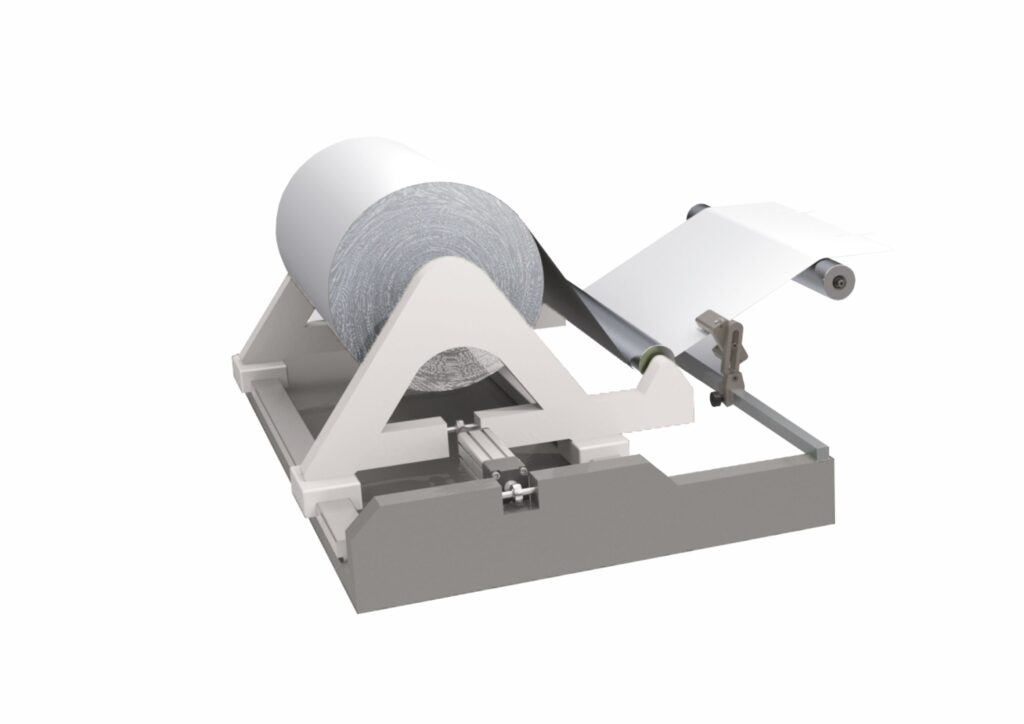
These systems can also operate with different guiding modes.
- Edge guiding is the most common configuration. It uses a single sensor to detect the position of one web edge, which becomes the reference for correction. It is widely used in printing machines, slitters and coating lines.
- Center guiding uses two sensors to detect both edges of the material and calculate its centre, which becomes the reference for correction. This is a typical solution in film extrusion, laminating and coating lines.
- Line guiding uses optical sensors to follow a printed line, pattern or colour contrast. It is often used in label printing and flexible packaging applications.
> Typical applications and benefits
In general, any process involving the processing of materials such as paper, plastic film, nonwoven fabric, aluminum, or others can benefit from a web guiding system. Wherever a material is unwound and processed, lateral alignment matters.
Typical applications include:
- printing, where web guiding helps maintain register;
- packaging, where it supports precise folding and sealing;
- slitting, where it ensures the material is cut in the correct position;
- laminating and coating, where it contributes to the precise overlap of multiple materials;
- battery production, where alignment is essential for electrode coating;
- nonwoven and hygiene applications, where multiple materials must be accurately combined.
The benefits of an automatic web guiding system are very tangible:
- High precision, because the material is kept within very tight tolerances even at high speeds.
- Reduced waste, because fewer alignment errors mean fewer defective products, fewer web breaks and less need to increase trim.
- Higher line speed, since the system continuously corrects the position of the material without requiring the operator to slow down the process.
- Less manual intervention, resulting in lower operator workload and more consistent machine performance.
All these factors ultimately lead to better final product quality and higher overall plant efficiency. Fewer stops, fewer defects, higher speed and more stable processing make the converting line significantly more efficient.
> Re solutions for web guiding systems
Re designs efficient, reliable and tailor-made solutions for web guiding systems:
- Sensors: ultrasonic, infrared or optical sensor to ensure detecting speed and accuracy with any kind of material
- Actuators: pivoting frame systems, steering roller systems and linear actuators for any kind of application as they can be tailor-made. A wide range of sizes and configurations are available.
- Control units: state-of-the-art control units offering high processing speeds and absolute precision.
By combining these components correctly, it is possible to create an effective web guiding system that is suited to the machine, the material and the production objective.
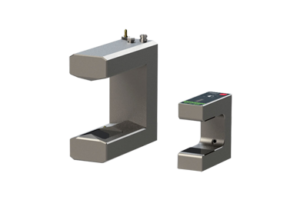
Sensor for webguide
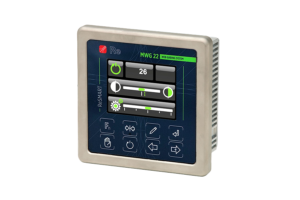
Control units
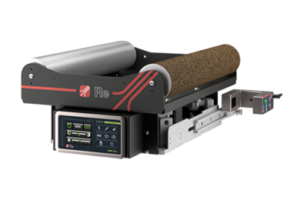
Webguide device
F.A.Q.
A web guiding system is used to keep a moving material in the correct lateral position while it travels through a machine. Its purpose is to prevent web drift and improve process stability, accuracy and efficiency.
It works through a continuous cycle of detection, processing and correction. A sensor detects the position of the material, the controller calculates the deviation from the reference, and the actuator applies the correction in real time.
The main components are the sensor, the controller and the actuator. Together, they detect the position of the material, process the signal and apply the mechanical correction.
Edge guiding uses one sensor to control the position of one web edge. Center guiding uses two sensors to detect both edges and keep the centre of the material in the correct position.
Because poor alignment can cause print defects, cutting errors, laminating problems, waste, machine stops and lower final product quality. Proper alignment improves both process stability and final results.